
Home » Our Pipeline » ANB101

Modulating plasmacytoid dendritic cells to reduce inflammation

ANB101 targets BDCA2 on pDCs — potently inhibiting interferon secretion and downstream immune activation at a central upstream driver of autoimmune and inflammatory disease.

ANB101 is a BDCA2-modulating antibody designed to specifically target plasmacytoid dendritic cells (pDCs).

By engaging BDCA2, a molecule expressed primarily on pDCs, ANB101 aims to potently inhibit interferon secretion and downstream immune activation, addressing a central driver of autoimmune and inflammatory disease

Why ANB101 is a promising approach for autoimmune and inflammatory diseases

pDCs play a pivotal role in bridging innate and adaptive immunity. When activated, they:

  • Secrete Type I interferons at levels up to 1,000× higher than other immune cells
  • Present antigens to the adaptive immune system
  • Amplify inflammatory cascades that sustain chronic disease

pDCs accumulate in inflamed tissues across rheumatologic and other immune-mediated diseases. Prior BDCA2-modulating approaches have demonstrated mechanistic proof-of-concept in lupus, underscoring the therapeutic potential of this pathway.

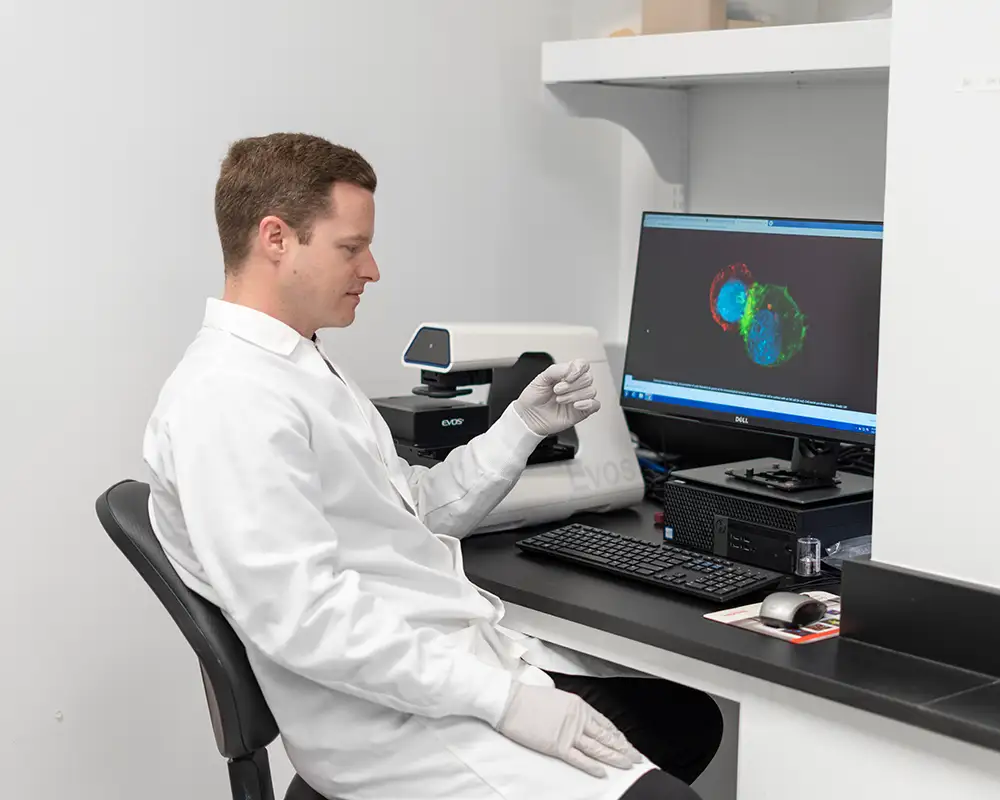
image of a worker in the lab

Robert working in the First Tracks Lab

How ANB101 works

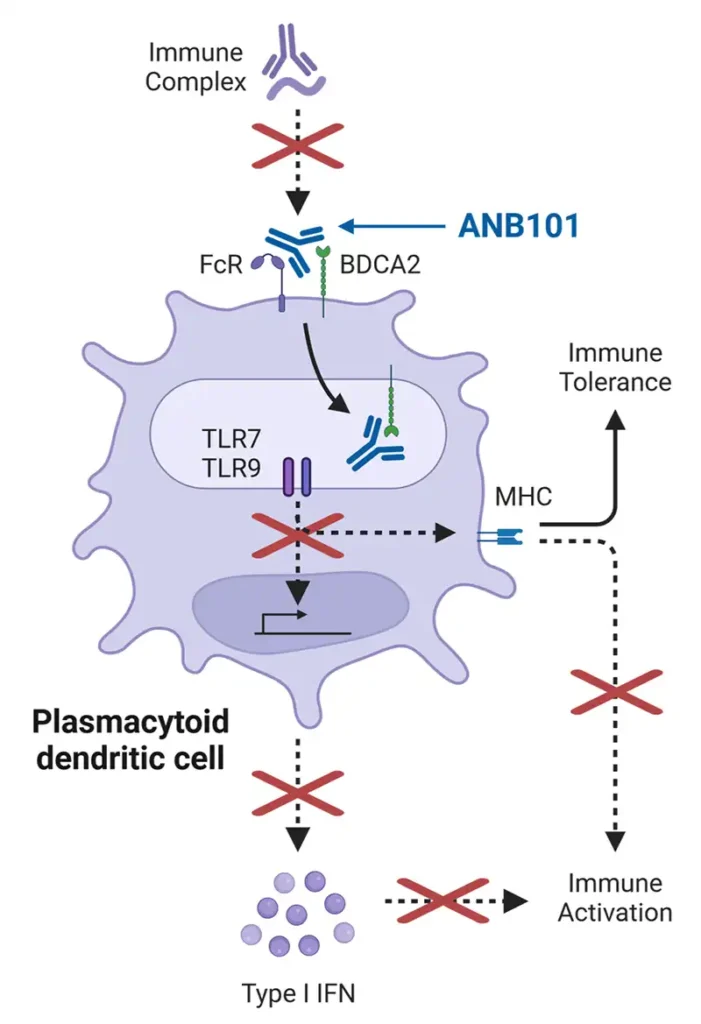
graphic related to ANB101

Inhibition of Type I interferon secretion

  • ANB101 profoundly reduces interferon production — a key amplifier of autoimmune inflammation
  • Lower interferon levels help reduce downstream immune activation and inflammatory cytokine release

Data suggest ANB101’s more potent antibody results in:

  • Longer half-life compared to litifilimab
  • Deeper and more durable PD effect on pDC depletion

Together, these effects position ANB101 as a promising upstream modulator of immune activity across multiple autoimmune and inflammatory diseases.

For the latest on our clinical development