
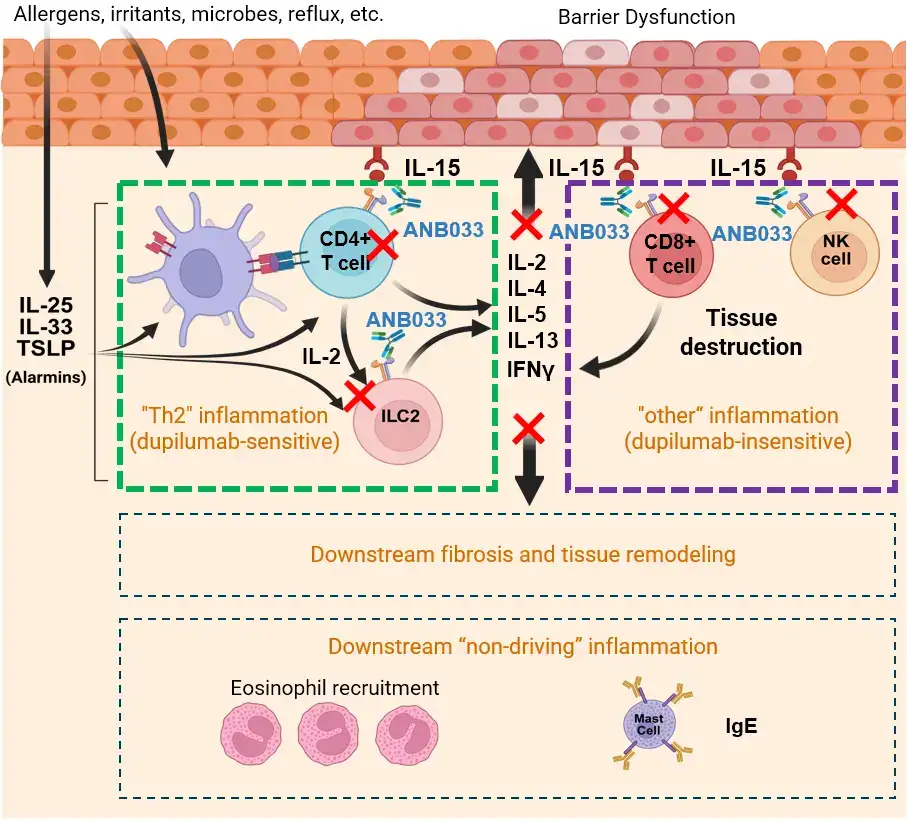
Moving upstream to address the root of EoE pathology
EoE causes chronic esophageal inflammation that impairs quality of life. ANB033’s upstream CD122 blockade targets the immune pathways driving this persistent damage.
Eosinophilic esophagitis (EoE) is a chronic immune‑mediated disease in which eosinophils accumulate in the lining of the esophagus in response to food antigens, allergens or acid reflux.
- This persistent inflammation can damage the esophageal tissue, causing difficulty swallowing and episodes where food becomes stuck
- Without effective treatment, EoE can significantly impair quality of life
Why targeting CD122 is a promising approach to treat EoE
Similar to celiac disease, EoE is driven by multiple immune pathways, including those sensitive and insensitive to dupilumab. CD122 sits upstream of these pathways, making it a compelling target for broader and more durable immune modulation.
- ANB033 blocks CD122, the shared receptor subunit for IL‑15 and IL‑2, two cytokines that sustain pathogenic immune activation
- By modulating both IL‑15– and IL‑2–driven biology, ANB033 has the potential to address multiple drivers of EoE, including those not fully controlled by existing therapies
- This upstream approach may reduce inflammatory immune cell subsets, including ILC2s, which play a central role in EoE pathology
How ANB033’s mechanism aligns with EoE biology
EoE involves a complex network of immune cells and cytokines that perpetuate chronic inflammation. ANB033’s multiple‑pathway blockade aligns with these disease mechanisms.
Select the beacons to learn more
CD4+ and ILC2 (dupilumab sensitive)
- Reduces CD4+ T cell proliferation
- Reduced IL-5/13 from CD122+ IL2 and CD4+ T cells
CD8+ and NK (dupilumab insensitive)
- Inhibiting IL-15 signaling reduces
- IFNy
- Granzyme B
- CD8+ T cell proliferation
- NK cells
Upstream pathways lead to downstream eosinophilic infiltration into tissue.
For the latest on our clinical development
To access scientific presentations and publications on ANB033